Associate Justice Ruth Bader Ginsburg died yesterday, aged 87, from complications arising from pancreatic cancer. Appointed in 1993, she has become somewhat of a liberal icon for her stances on key progressive issues which have made their way to the Supreme Court.
Ginsburg’s death has utterly reshaped both the presidential race and the race for the Senate. Depending on the actions of Trump and certain key senators over the next few days (when a decision to proceed with a nomination or not will be made), Republicans could cement a conservative supermajority on the Supreme Court, or further sink their chances of holding the Senate- or both.
The Current Status of SCOTUS
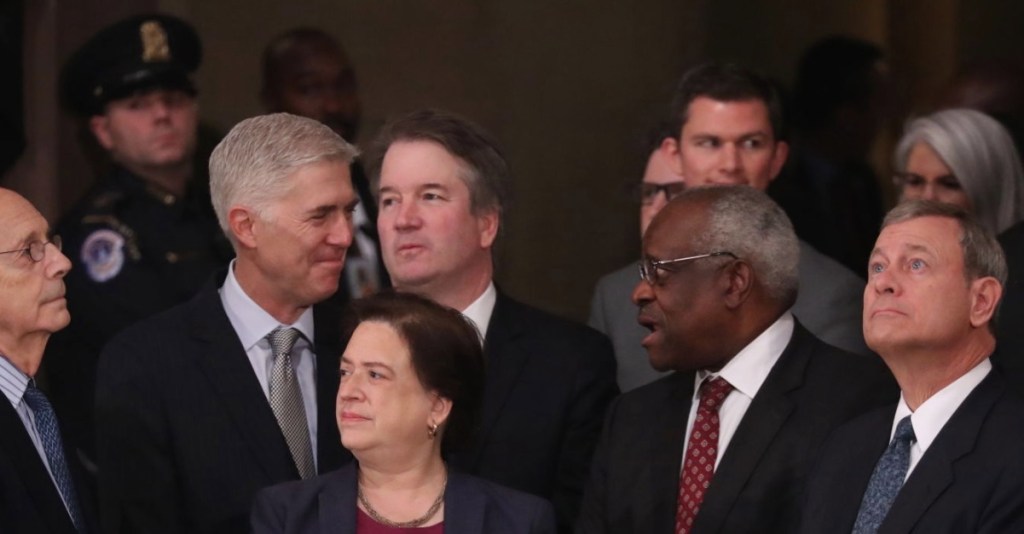
Nine justices sit on the United States Supreme Court. They are lifetime appointments, so can only be replaced when a sitting justice dies, retires, or is impeached. When a vacancy is created, the president nominates a successor, which the Senate then votes to approve or reject after holding hearings. Since 2017, a simple majority of 51 is all that is needed to confirm a justice.
Before Ginsburg’s death, the Supreme Court had a 5-4 conservative majority. Prior to 2018, the Court was relatively balanced, with four conservatives, four liberals, and a swing vote in conservative-leaning but ultimately libertarian Anthony Kennedy. When Kennedy retired in 2018, Trump replaced him with the more solidly conservative Brett Kavanaugh.
Kavanaugh however was Trump’s second Supreme Court appointment. His first was Neal Gorsuch, and who will likely be brought up a lot during this nomination fight.
Garland And Gorsuch
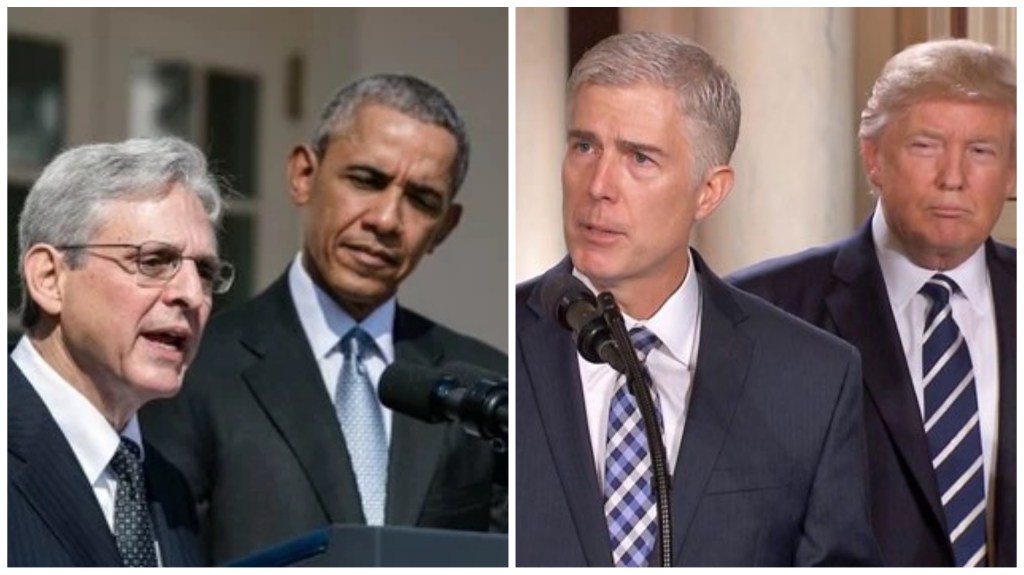
The last time a Supreme Court justice died during a presidential election year was Antonin Scalia in February 2016. Scalia was a conservative justice, meaning his death gave Barack Obama an opportunity to give the Supreme Court a liberal majority for the first time in decades. He nominated Merrick Garland, Chief Judge of the Court of Appeals for the District of Columbia Circuit, to the seat.
However, Senate Majority Leader Mitch McConnell decided that he didn’t want that, andannounced in a virtually unprecedented move that the Senate would not hold hearings on any Supreme Court nominee until after the 2016 election. To justify this, he stated that the American people should get to decide on the nominee as it was an election year. While previous Supreme Court vacancies in election years were rare, they did happen (most recently in 1968), and hearings had been held.
The Republican Senate majority fell in line behind McConnell, and Scalia’s seat remained vacant until Gorsuch’s appointment in 2017.
The Ginsburg Vacancy
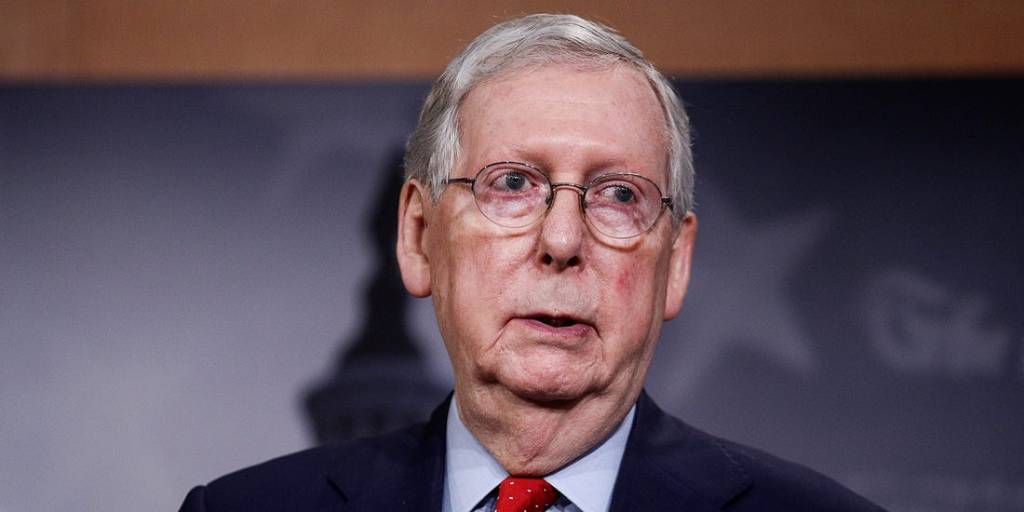
It may not surprise you to learn that Mitch McConnell has already pledged to fill Ginsburg’s seat before this year’s election.
Despite the fact that Scalia’s death was nine months before the election in 2016, compared to this year’s election happening in just 45 days, McConnell has decided to abandon his own fake precedent on the basis that the GOP controls both the presidency and the Senate, which makes this time different, for some reason.
It is safe to assume that the Democrats will not engage with any nomination made by Trump before the election, and that most, but not all, Republicans will follow McConnell’s lead. The Senate is currently split 53-47 in favour of Republicans , so to block a nomination, Democrats will need four GOP senators to side with them. Therefore, all eyes are turning towards a handful of moderate and vulnerable Republicans who will decide whether a nomination process goes ahead.
Lisa Murkowski (Alaska), perennial swing vote, said in an interview just hours before the announcement of Ginsburg’s death that she wouldn’t vote on a Supreme Court nomination before the election.
Mitt Romney (Utah) is one of Trump’s most consistent and vocal Republican critics. He hasn’t made a statement yet, but has historically had a distaste for this kind of norm-breaking.
Former chairman of the Senate Judiciary Committee Chuck Grassley (Iowa) said in July that he wouldn’t support a nominee this year.
Current Senate Judiciary chairman Lindsey Graham (South Carolina) said in October 2018 that he would not support a Supreme Court nomination this close to an election. However when asked about it in August of this year, he stated: “We’ll cross that bridge. After Kavanaugh, the rules have changed as far as I’m concerned” (Graham frequently showed anger during the Kavanaugh confirmation over what he portrayed as a political hit job on Kavanaugh).
Notably, Graham is up for reelection this November. While normally his seat would be safe, some recent polls have shown him tied with his Democratic challenger, Jaime Harrison.
Susan Collins (Maine) said earlier this month that she would not vote on a Supreme Court appointment in October. Collins is up for re-election this November, and is one of the most likely Republicans to lose- in no small part because of her previous vote to confirm Brett Kavanaugh. She is also frequently paired with Murkowski as one of the swing votes of the Senate.
Martha McSally (Arizona), another incredibly vulnerable GOP senator running this November, tweeted in the hours after Ginsburg’s death that the Senate should vote on Trump’s nomination to replace Ginsburg.
Other vulnerable GOP senators running this November who could dissent from McConnell include Cory Gardner (Colorado), Joni Ernst (Iowa), and Thom Tillis (North Carolina).
Additionally, Joe Manchin (West Virginia), a conservative Democrat, voted to approve both of Trump’s nominees thus far, and may do so again.
The Effect On The Race
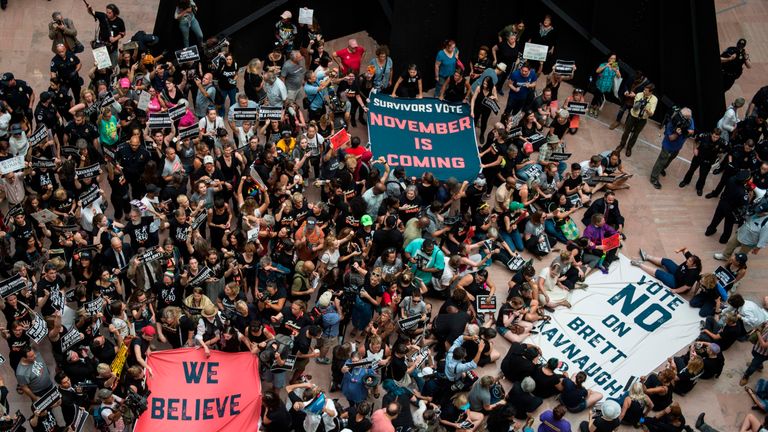
Those vulnerable Republicans seeking re-election now face a hard decision. If they side with Trump and McConnell, they can ensure that the Supreme Court will have a conservative majority for generations. However, their hypocrisy will be pretty unambivalent, and in an environment where Republicans are already incredibly unpopular, especially because of their attitude towards civic norms and impartiality, this could torpedo their chances of holding the Senate. Adding to the complications is the fact that any Republican senator seeking to block a nomination will be depending on three of their colleagues to do the same in order to be successful. Equally, vulnerable senators who decide to vote to proceed with a nomination will be depending on four of their colleagues not siding with Democrats. On top of that, there is a risk for some that even if they decide not to support a nomination, in an effort to appeal to independents in their district, they might lose re-election anyway, and not have a Supreme Court justice to show for it.
It’s hard to say what the critical mass of voters would think of an effort by Trump to replace Ginsburg before the election. Republican voters have historically cared more about the Supreme Court when voting in presidential elections- indeed, a sizable portion of Trump’s base justify voting for him, despite their distaste for much of his behaviour, because they know he will appoint conservative justices. Democrats, meanwhile, have started paying more attention to the Supreme Court, especially after the refusal of the Garland and the Kavanaugh confirmation. In polling carried out at the time, a majority of all voters and a plurality of independent voters supported Garland’s confirmation1 and opposed Kavanaugh’s2.
A push to replace Ginsburg could be a reminder that Trump is fundamentally helping the conservative cause, or it could be a final egregious example of Republican power-grabbing. A handful of senators are going to have to try to predict which way voters will go. If they predict wrong, they may just have to say goodbye to the Senate.
UPDATE: Since this article was published, Thom Tillis and Lindsey Graham have indicated they will support Trump in making a nomination before the election. Susan Collins and Lisa Murkowski have stated they will oppose.

